IIoT: The Digital DNA of Modern Industry
The Industrial Internet of Things (IIoT) is transforming future factories by connecting machines, sensors, and processes within a digital ecosystem that optimises efficiency and productivity.Factories in the 21st century are digital organisms that thrive on data. The Industrial Internet of Things (IIoT) has transformed industrial spaces into environments where every machine, sensor, and process generates valuable information, redefining modern manufacturing. While traditional plants operate under predefined parameters, IIoT-powered facilities continuously learn and evolve, adapting to new demands and optimising processes in real time.
The scale of this industrial transformation is reflected in compelling figures: the global IIoT market is projected to reach £411 billion by 2025, surpassing £1.72 trillion by 2034, with a compound annual growth rate (CAGR) of 17.20%. These figures are more than just a trend; they signal a radical shift in industrial operations in the digital age.
Digital Alchemy
IIoT is far more than just connecting machines to the internet. Picture an orchestra, where each instrument not only plays its part but also learns, adapts, and improves with every performance.
At the core of this industrial symphony lies the convergence of operational technology (OT) and information technology (IT), two fields that historically functioned in isolation.
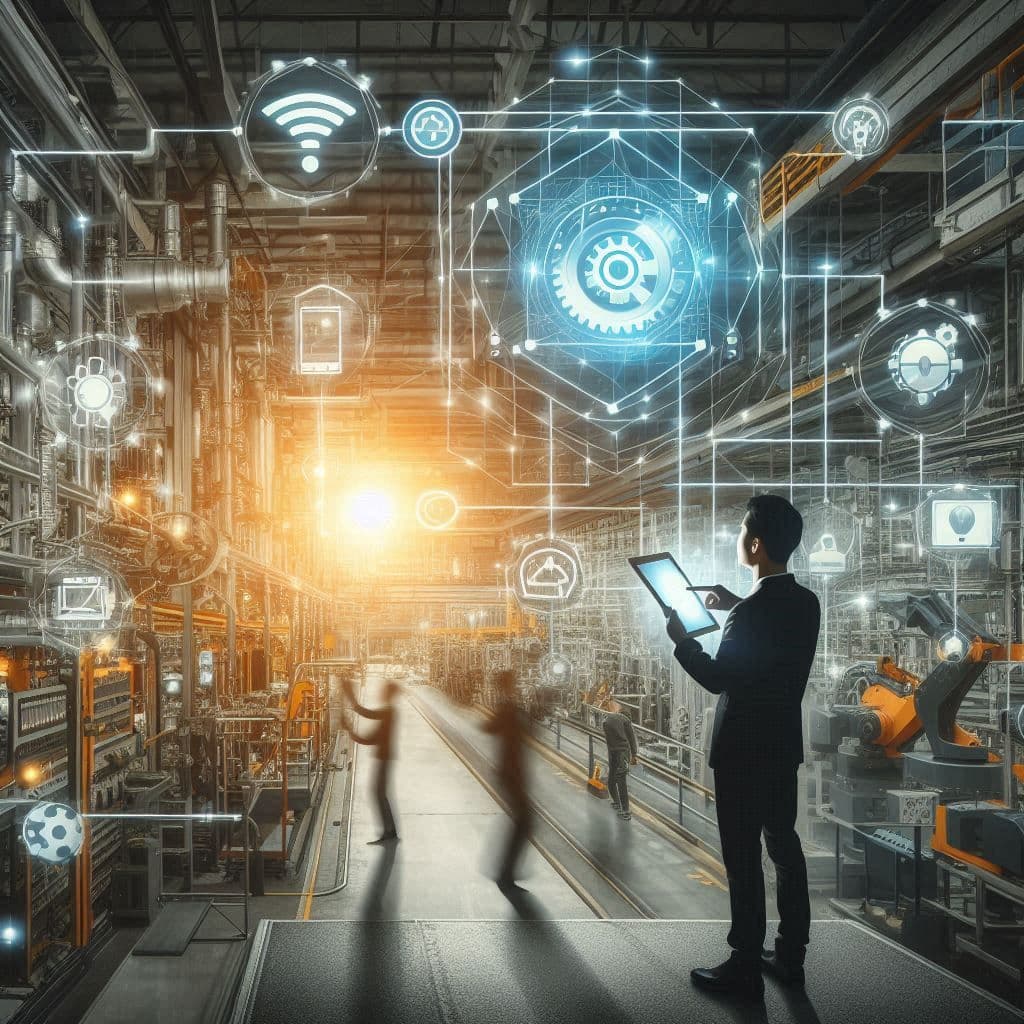
This fusion takes shape through an industrial neural network, composed of ultra-sensitive sensors that act as the factory's nerve endings, collecting data on every aspect of the production process. These data travel along digital highways to cloud computing systems, where machine learning algorithms transform them into actionable insights.
In some automotive plants, for example, IIoT has enabled the creation of digital twins of entire production lines, allowing for the simulation and optimisation of processes before their real-world implementation. This has resulted in a 30% reduction in downtime and a 25% decrease in quality defects.
Catalysts of Change
The expansion of IIoT is no accident. It is underpinned by fundamental developments that have matured concurrently, creating the perfect environment for its growth. The democratisation of cloud computing has removed the barriers to accessing vast data processing infrastructures.
The miniaturisation and cost reduction of smart sensors have sparked a true revolution in industrial monitoring. Sensors that once cost thousands of pounds are now mass-produced at a fraction of the cost, enabling unprecedented data granularity.
A report by StartUs Insights suggests that the global IIoT market boom is also leading to job creation, with over 1.2 million sector workers and an increase of 64,900 jobs in the past year. Innovation continues to be central to IIoT's development, with over 80,800 patents filed by 12,200 applicants and more than 1,290 grants awarded.
The study highlights the United States, India, Italy, Germany, and China as key industrial hubs, with cities like Bangalore, Pune, Chennai, Singapore, and Shenzhen leading innovation.
In investment terms, the sector has raised an average of £16.7 million per round across more than 5,300 financings, enabling the consolidation of 1,380 startups. Companies like Rockwell Automation, Bosch Capital, and Parametric Technology have injected a total of £3.98 trillion into this ecosystem.
Additionally, innovative startups such as Koeebox, Knowix, Dalnex, and Adaptive Systems are driving IIoT evolution with solutions based on 5G, industrial automation, and advanced networks, solidifying their role as key drivers of digital transformation in industry.
Transforming Sectors
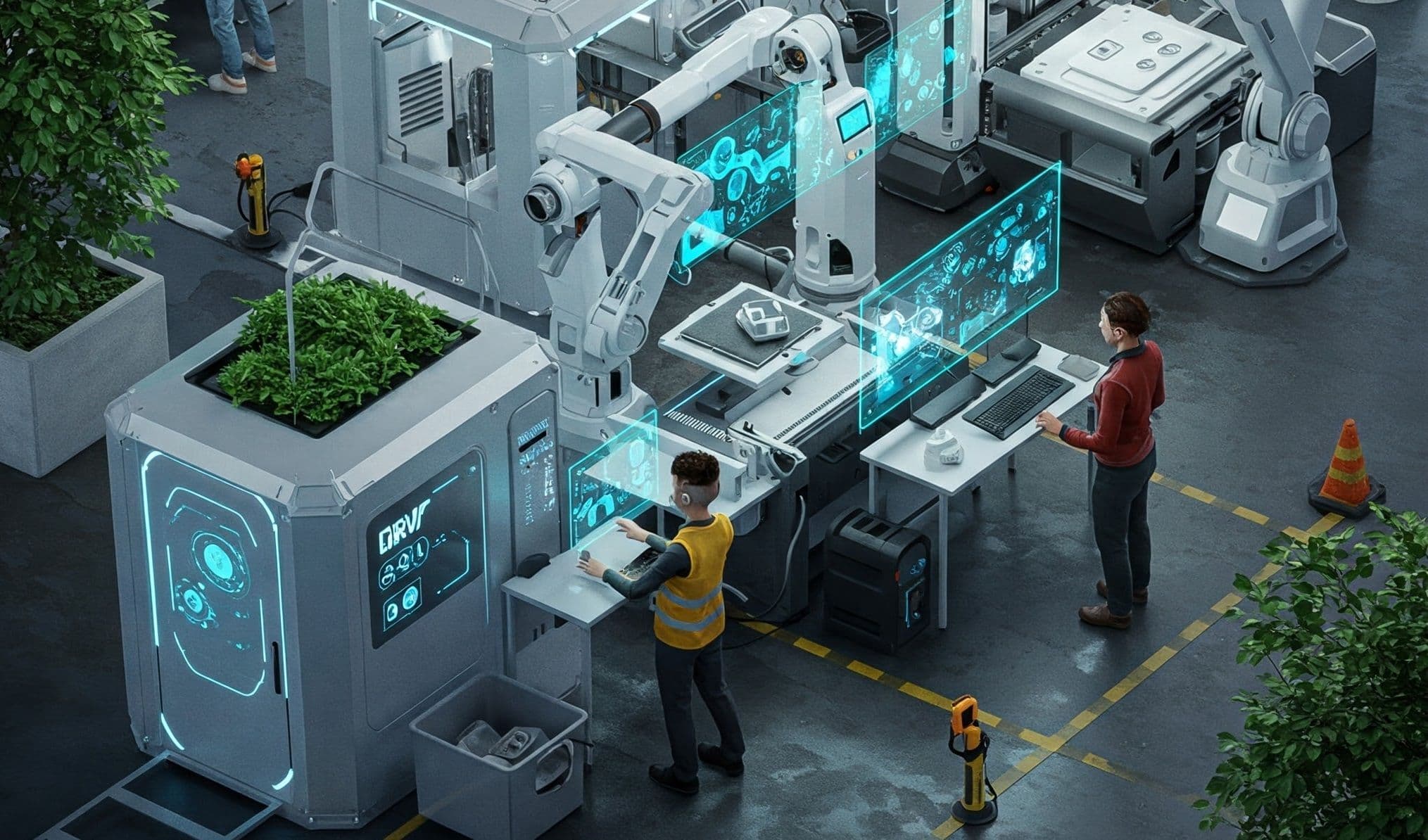
IIoT's impact is felt differently across various industries. In manufacturing, predictive maintenance systems are redefining operational efficiency. Microscopic sensors detect even the smallest machine vibration variations, predicting failures before they happen and enabling preventative maintenance that minimises downtime.
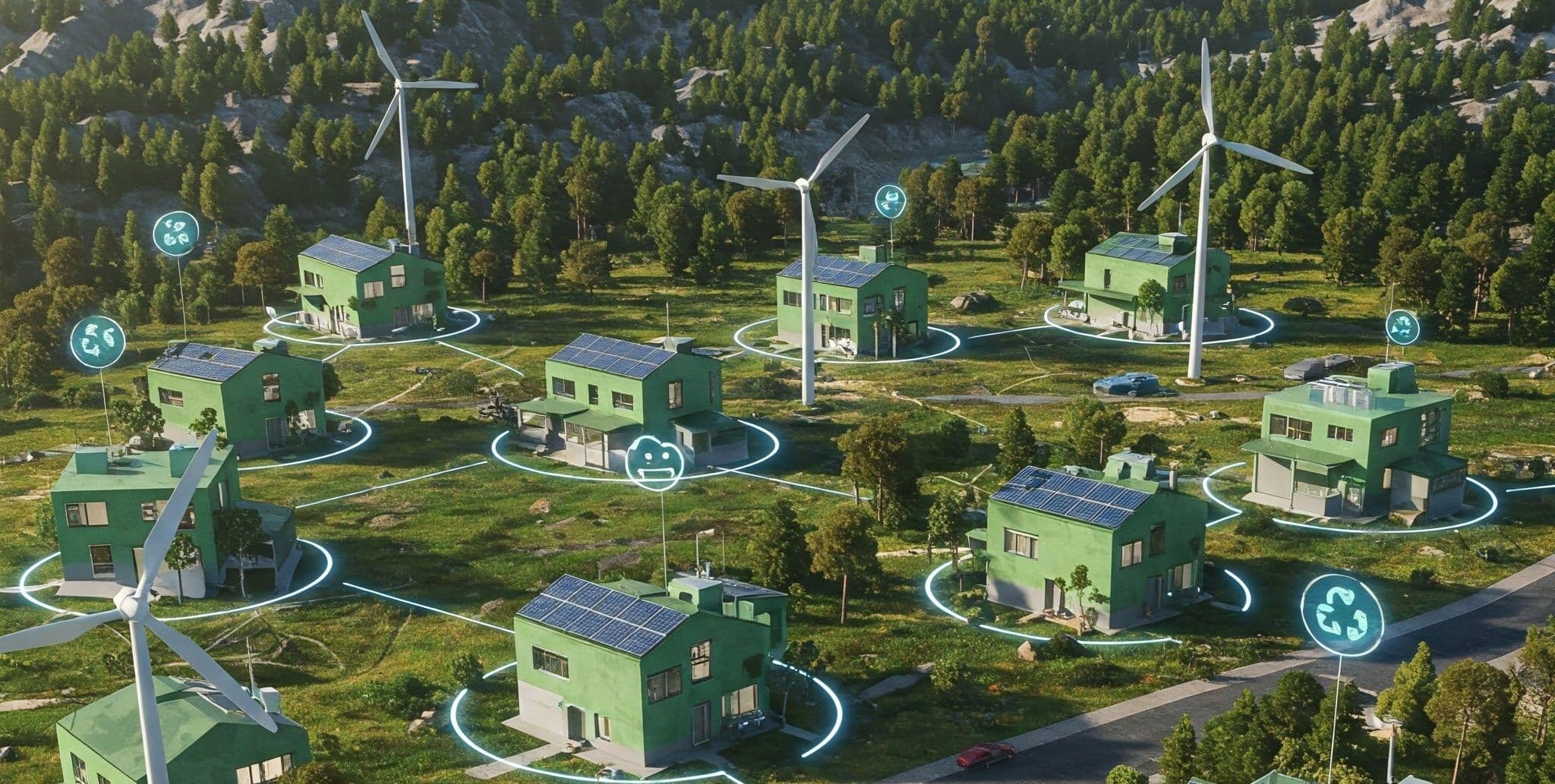
In the energy sector, smart grids equipped with IIoT sensors optimise real-time electricity distribution, reducing losses and improving the integration of renewable energy sources. Modern oil platforms have become floating data centres, where thousands of sensors monitor everything from well pressure to valve conditions.
Mining, traditionally cautious in adopting new technology, is undergoing a revolution in safety and efficiency. Autonomous vehicles equipped with IIoT sensors operate in extreme conditions, while intelligent ventilation systems automatically adjust oxygen levels and detect hazardous gases.
The Costs of Progress
However, implementing IIoT is not without its challenges. Cybersecurity remains a primary concern: each connected sensor represents a potential entry point for cyberattacks. The 2017 Triton incident, where hackers attempted to manipulate industrial safety systems via IIoT devices, serves as a stark reminder of these risks.
Implementation costs remain high, especially for medium and small businesses. Upgrading legacy infrastructures and training specialised talent require multi-million-pound investments.
Furthermore, organisational resistance to change remains a significant hurdle: digital transformation requires not only new technologies but also a revolution in corporate culture.
The Digital Horizon
The future of IIoT is closely tied to the evolution of complementary technologies. The arrival of 5G promises to revolutionise industrial connectivity, enabling ultra-low latencies and massive connection densities. Integration with advanced artificial intelligence is creating increasingly autonomous systems that can not only detect problems but resolve them without human intervention.
The question is no longer whether industries will digitalise, but when and how they will do so. IIoT is redefining what it means to be competitive in the 21st century. Companies that fail to adopt these technologies risk being left behind in an increasingly digital and connected market.
The promise of a 100% connected industry is no longer science fiction. It is a rapidly approaching reality, driven by the convergence of mature technologies and the imperative need for greater efficiency and sustainability. The future of industry will be intelligent, connected, and sustainable, or it will not be at all.