
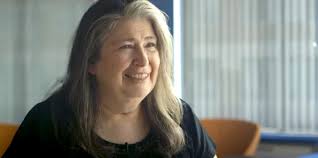
Radia Perlman and the Algorithm That Changed the Course of Global Connectivity
A pioneer in the world of networking, Radia Perlman defied stereotypes and solved problems that once seemed insurmountable. Her ingenuity not only drove the evolution of the Internet but also laid the foundations for more efficient and secure technologies.For a long time, the Internet was perceived as a domain dominated by male figures. However, behind the scenes, brilliant minds like Radia Perlman’s have been instrumental in shaping the architecture of the global network. Known as the “Mother of the Spanning Tree Protocol,” Perlman created one of the most crucial elements underpinning the Internet as we know it today.
The Beginnings of a Pioneer
Born on 1 January 1951 in Portsmouth, Virginia, USA, Radia Joy Perlman grew up in an environment that nurtured her intellectual curiosity from an early age. Her mother, a computer programmer for the US government, played a pivotal role in introducing her to the world of mathematics and science.
Perlman began her academic journey at the Massachusetts Institute of Technology (MIT), earning a Bachelor's degree in Mathematics in 1973. During her university years, she demonstrated exceptional talent for solving complex problems. She went on to complete a Master’s degree in 1976 and a PhD in Computer Science in 1988, both at MIT.
Her professional career began at BBN Technologies, where she worked on projects related to ARPANET, the precursor to the Internet. She later joined Digital Equipment Corporation (DEC), where she would develop her most significant contribution to networking: the Spanning Tree Protocol.
The Problem That No One Could Solve
In the early 1980s, computer networks faced a seemingly intractable problem. Network bridges—devices used to connect different network segments—created infinite data loops when multiple paths existed between two points. This led to so-called “broadcast storms,” which could bring entire networks to a halt.
When assigned the task of solving this issue at DEC, Perlman was given just a weekend to find a solution. “They told me it was an impossible problem. When something seems impossible, I find it intriguing,” she later recalled in an interview.
The Birth of the Spanning Tree Protocol
In 1985, Perlman developed the Spanning Tree Algorithm (STP), an elegant mathematical solution that enabled network bridges to communicate and disable redundant links. This ensured that only a single, loop-free path remained active between any two networks, while keeping backup links available to activate automatically if the primary connection failed.
The most remarkable aspect of her solution was its conceptual simplicity and robustness.
STP permanently resolved the problem, allowing Ethernet networks to expand safely and reliably, thus laying the groundwork for the exponential growth of local area networks (LANs) and, ultimately, the Internet.
Beyond the Spanning Tree
Although the Spanning Tree Protocol remains her most renowned contribution, Perlman’s career has been filled with other equally significant innovations.
One of these is TRILL (Transparent Interconnection of Lots of Links), a major improvement over STP that allows all available network links to be used simultaneously, increasing bandwidth and efficiency.
She also developed the Robust Network Routing and Protocol, a set of protocols designed to enhance the security and efficiency of network routing. Additionally, she played a key role in developing the DECnet Routing Algorithm, used in DECnet networks.
After her tenure at DEC, Perlman continued her career at companies including Novell, Sun Microsystems, EMC Corporation, Intel, and Dell EMC, where she continued innovating in areas such as network security, encryption, and routing protocols.
Challenging Stereotypes
Throughout her career, Perlman has faced various obstacles as a woman in a predominantly male field. “I don’t like being called the ‘Mother of the Internet’. I think it reinforces the stereotype that women in technology can only be mothers,” she has stated on several occasions.
Although she has been a strong advocate for women in technology, she prefers to lead by example rather than through direct activism. Her philosophy has always been to focus on solving meaningful problems without allowing gender stereotypes to interfere with her work.
A Lasting Legacy
The impact of Perlman’s work on the Internet’s infrastructure is immeasurable. The Spanning Tree Protocol became an industry standard (IEEE 802.1D) and remains fundamental to modern networks.
While newer technologies such as TRILL—also developed by Perlman—are enhancing STP, the fundamental principles of her algorithm continue to underpin many contemporary networking solutions.
Holding over 100 patents, Perlman has also published numerous scientific papers. Her book Interconnections: Bridges, Routers, Switches, and Internetworking Protocols is considered a definitive reference in the field of computer networking. Her accolades include the USENIX Lifetime Achievement Award, induction into both the National Inventors Hall of Fame and the Internet Hall of Fame, and honorary doctorates from multiple institutions.
The Engineer Who Never Saw Herself as a Programmer
Despite her immense contributions to computing, Perlman has often remarked that she does not consider herself a programmer. “I’m good at mathematics and designing algorithms. Programming is just a tool to express those ideas,” she has explained.
This perspective highlights her focus on fundamental concepts rather than technical implementation, which perhaps explains the enduring elegance and effectiveness of her solutions.
Inspiring Future Generations
At 74, Radia Perlman remains active in the technology industry, working as a Fellow at Dell EMC and sharing her knowledge through conferences and publications.
Her story serves as an inspiration, particularly for young people and women aspiring to careers in technology. Perlman’s legacy is a reminder that the Internet is not the work of any single individual but the result of collective ingenuity. Like her, many brilliant minds have tackled fundamental problems with innovative and lasting solutions.
As she often says: “Technology isn’t about tools, but about the way we think to solve problems.”
This philosophy, coupled with her extraordinary work, ensures that Radia Perlman’s name will remain indelibly etched in the history of the Internet—reminding us that behind every cable, every connection, and every protocol, there are visionaries who have made our interconnected world possible.