
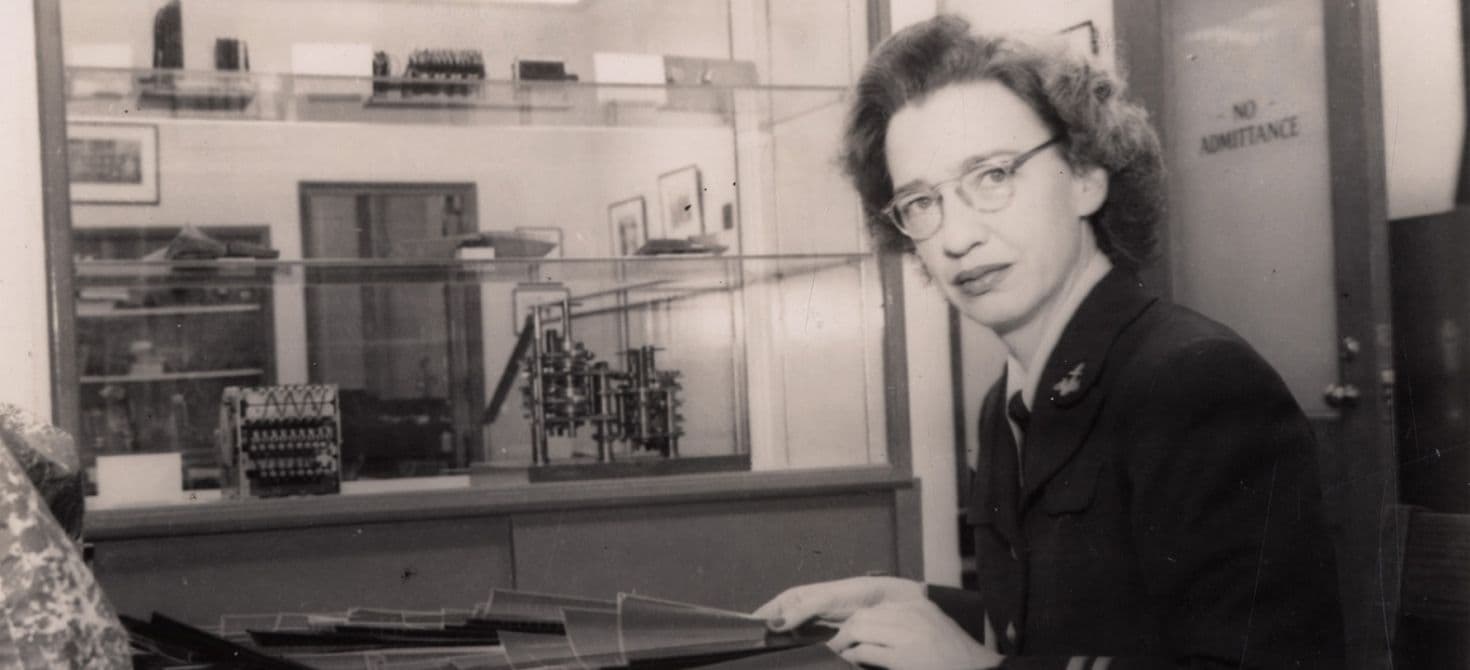
Grace Hopper: The Mother of Modern Computing
A trailblazer in computing, she developed tools that bridged the gap between people and machines. Her groundbreaking innovations, including the COBOL programming language, continue to support critical technological systems across the globe.Grace Murray Hopper occupies a prominent place in the history of computing. She paved the way for women in a male-dominated field with her remarkable talent and determination, revolutionised the programming of computers, and left a legacy that endures to this day.
Born on 9 December 1906 in New York City, Hopper grew up in a family with a strong military tradition. From her paternal grandfather, she inherited a passion for mathematics and geometry. This early interest set her on a path that would change the course of technological history.
In 1930, she married Vincent Hopper and graduated with a degree in mathematics and physics from Vassar College. Four years later, she earned a doctorate in mathematics from Yale University, becoming one of the few women of her time to achieve such academic distinction.
A Pioneer in Computing
Hopper’s sharp intellect soon led her to join the programming team for the Mark I, the first large-scale automatic digital computer, built by IBM in collaboration with Harvard University. This groundbreaking machine, which was operational during World War II, laid the foundations for modern computing.
Hopper played a critical role in the development of the UNIVAC I, the first commercially available large-scale computer. However, her vision extended far beyond hardware.
She championed the concept of high-level programming languages, leading to the creation of the A-0 compiler, the first of its kind. This invention transformed programming by enabling computers to translate human-readable instructions into machine code, making programming more accessible and efficient.
The Legacy of COBOL
Hopper’s most enduring contribution is COBOL (COmmon Business-Oriented Language), a programming language designed to be easily understood by both humans and machines. COBOL revolutionised business and financial applications, streamlining operations and increasing efficiency.
Remarkably, COBOL remains in use today, underpinning critical systems in banking, government, and commerce across the globe.
The Origin of the 'Bug'
Hopper is also credited with popularising the term "bug" to describe a computer error. While working on the Mark II (not the Mark I, as is often mistakenly reported), she famously discovered that a moth had caused a malfunction by obstructing one of the computer’s circuits.
She affixed the insect to her logbook, marking it as the first recorded "bug" in computing history. The term has since become an integral part of the tech lexicon.
A Dual Career in Computing and the Military
In addition to her pioneering work in computing, Hopper had a distinguished career in the United States Navy. She joined the Naval Reserve during World War II and remained active in the military for decades, eventually achieving the rank of Rear Admiral. Her contributions to both the military and the technological world earned her the nickname "Amazing Grace" among her contemporaries.
A Lasting Inspiration
Hopper passed away in 1992, but her legacy continues to inspire new generations of technologists. Her work not only shaped the field of computing but also championed gender equality in science and technology.
She demonstrated that intellect and innovation know no boundaries of gender or convention, making her an enduring role model for aspiring programmers and engineers.
Today, every line of COBOL code and every breakthrough in technology owes a debt to Grace Hopper’s foresight, creativity, and determination. She remains a testament to the power of visionaries who see beyond the constraints of their time.